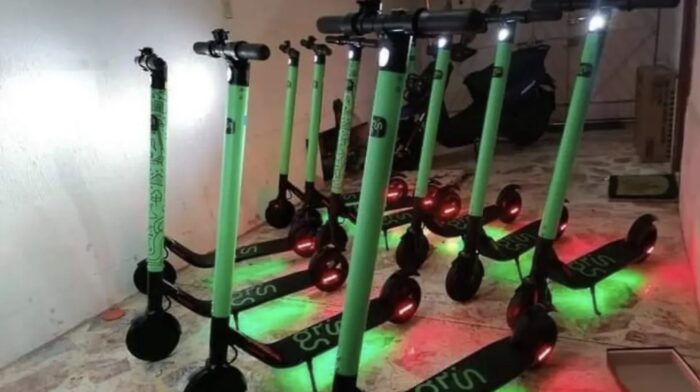

The use of electric scooters has experienced exponential growth on the streets of Tabasco, emerging as an affordable and agile transportation alternative for young people, workers, and delivery drivers. However, this vehicular boom is advancing completely outside the law, operating in a legal vacuum that concerns both local authorities and urban mobility groups.
Currently, major avenues in Villahermosa, such as Paseo Tabasco and Adolfo Ruiz Cortines, share daily traffic among cars, motorcycles, pedestrians, and these personal mobility vehicles. The lack of specific regulations means there are no mandatory requirements for riders, such as wearing helmets, carrying liability insurance, or registering the units.
Furthermore, this scenario leaves agencies like the State Highway Police and the Mobility Secretariat without clear authority to enforce penalties or properly supervise circulation. In the event of an accident, riders face severe legal uncertainty regarding responsibilities and fines, as the Congress of Tabasco has yet to receive formal legislative initiatives to address the issue.
While regions like Mexico City have begun implementing mandatory registration schemes and speed limits for similar alternative transport, the debate in Tabasco remains open. Various social and political sectors agree that modernizing the Mobility Law is urgent to ensure road safety and achieve harmonious coexistence on public streets.
Source: https://oem.com.mx